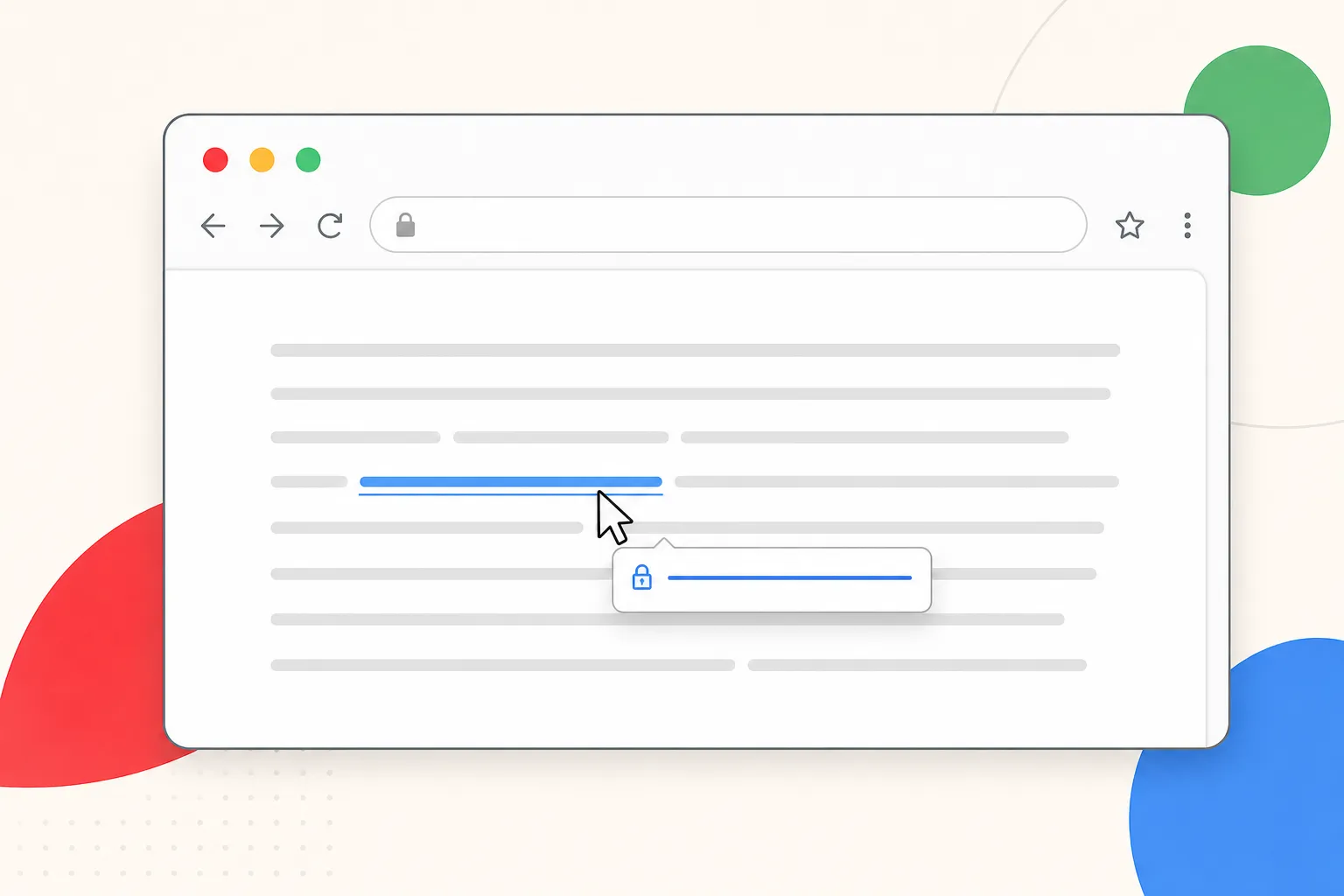
You click links every day, but the words you click do more than move you to another page. They set expectations for readers, signal relevance to search engines, and even help AI systems decide which page best answers a question. When anchors are vague or over-optimized, you lose clicks, rankings, and trust.
Anchor text is the clickable text in a hyperlink that tells people and search engines what the linked page is about.
Why anchor text matters
Relevance and ranking. Anchors act like concise labels. When the words match the destination topic, they reinforce what that page should rank for. Consistent, natural anchors across internal links and selective external links help search engines map entities and topics to the right URLs.
Accessibility and UX. Screen readers announce anchor text out of context. Clear wording such as “compare hiking boot durability data” is more useful than “click here.” Descriptive anchors improve click-through because the promise is obvious and aligned with the landing page.
AI search signals. Generative answer systems look for steady signals across your site. Natural anchors that consistently tie a question to the same authoritative page help that page surface as the answer, not a competing URL that has weaker context.
Risk control. Repeating the same exact-match keyword across many external links can look manipulative. Mix phrasing, keep it contextual, and use exact-match anchors sparingly. Focus on clarity first, then keywords.
Types of anchor text
1) Exact match
The anchor exactly matches a target keyword. Example: linking to a buying guide with “best hiking boots.” Useful when it fits the sentence naturally and the destination truly is the canonical page for that term.
2) Partial match
The anchor includes the keyword plus context. Example: “our picks for the best hiking boots for winter.” This reads naturally, conveys intent, and avoids repetition.
3) Branded
The anchor is a brand or product name. Example: “RankGoat case studies.” Branded anchors are safe and useful for homepages, product hubs, and policy pages.
4) Generic
Non-descriptive cues like “learn more.” Use only when necessary, and surround with clear context so the meaning is still obvious to readers and assistive tech.
5) Naked URL
The visible link is the URL itself, like “https://example.com”. Acceptable for citations, but weaker for accessibility and topical clarity.
6) Image anchors
When an image links, its alt text functions as the anchor. Write alt text that describes the destination, such as “waterproof hiking boot review,” not just “boot.”
7) Natural long-form
Conversational anchors that mirror how people speak. Example: “see how we tested waterproofing after 60 miles.” These often earn higher clicks because they promise a specific benefit.
How to write anchors that help users and rank (with examples)
- Be literal and specific. Tell readers exactly what they get after clicking. If the page is a comparison, say “compare plans and features.” If it is a template, say “download the content brief template.”
- Write the sentence first. Draft the paragraph, then choose the anchor that fits how a human would say it. Natural reading beats keyword cramming.
- Match intent to destination. Informational phrasing for guides (“step-by-step schema guide”), commercial phrasing for product pages (“pricing and limits”), and navigational phrasing for brand resources (“RankGoat onboarding checklist”).
- Vary phrasing over time. A healthy mix of branded, partial-match, and natural long-form anchors looks organic and covers more related queries.
- Mind internal links. Internal anchors are powerful and low risk. Use them to connect clusters. From a “how to waterproof boots” post, link to the main buying guide using a partial match like “our field-tested hiking boot reviews.”
- Keep accessibility in view. Avoid “click here.” Your anchor should make sense if read aloud without surrounding text.
- Think in ranges, not rules. Most helpful anchors are 3–8 words and specific. Shorter is fine if it stays descriptive; longer is fine if it promises a clear benefit.
Good partial match example: In a hiking guide, “our field-tested picks for the best hiking boots” linking to the primary review page. Descriptive, natural, and aligned with intent.
Good branded example: “REI return policy” linking to the retailer’s policy page. The brand carries authority and the destination is clearly branded content.
Less helpful generic: “learn more” linking to a pricing page. If you must use it, make the sentence read “Compare plans and features on our pricing page” so the purpose is clear when read aloud.
Risky pattern to avoid: Dozens of external links using the same money term, like “cheap car insurance,” pointing to one URL. Mix in branded and partial-match wording and keep placements contextual.
Image anchor done right: A linked tent photo with alt text “4-person backpacking tent review and ratings.” The alt text describes the destination, not just the object.
In-prose tool example: If you mention a creator tool, use a concrete, intent-matched anchor such as add subtitles to video online when you reference a web-based AI video editor that adds, translates, styles, and burns captions with fast export to social platforms. Keep the anchor concise and let nearby copy carry extra detail.
Where anchor text fits in your broader SEO workflow
Topic planning and internal linking. Start by mapping clusters around revenue pages. Each supporting post should link to its hub with clear partial-match anchors. Give every hub a handful of unique, natural internal anchors so the signal is consistent but not repetitive.
Content production at scale. A done-for-you blog writing service keeps a steady cadence. That creates natural internal link opportunities and lets you test different anchor phrasings safely across related posts. Publishing with on-page SEO and schema ensures titles, headers, alt text, and anchors align.
Backlinks with context. External links matter more than the anchor alone. Pursue placements inside relevant paragraphs on real sites. Aim for editorial dofollow links where the surrounding sentence names the topic in plain English. You do not need perfect exact-match anchors if the placement is strong and the page is authoritative.
Indexing and technical health. Anchors cannot help a page that is not discoverable. Fix orphan pages by adding internal links from crawlable templates, resolve soft 404s, dedupe near-identical variants with canonicals, and set clear parameters and pagination. Validate sitemaps and robots rules so equity flows to the right URLs.
AI answer visibility. Track which pages surface in AI answers for your core questions. If a non-canonical page shows up, adjust internal anchors across the cluster to reinforce the intended target. Tune copy so your anchor wording matches phrasing users actually see in AI snippets.
Automation that ties it together. The highest ROI comes from a system: automated topic planning, draft creation, internal link insertion, technical checks, and monitored dofollow backlinks. Weekly crawl and indexing checks keep anchors effective by ensuring the right pages are discoverable, fast, and canonical.
Practical checklist to run monthly:
- Export internal links from your CMS or crawler and list top anchors per important URL.
- Replace vague anchors with specific, intent-matched phrases.
- Add 3–5 new internal links from fresh posts to each revenue page.
- Review external links earned last month and confirm they remain dofollow and contextual.
- Fix orphan pages and validate sitemaps, robots rules, and canonicals.
Key takeaways
- Write clear, specific anchors that match the destination and fit the sentence.
- Use a natural mix of branded, partial-match, and long-form anchors; go easy on exact match.
- Prioritize internal links and accessibility. They are high impact and low risk.
- Context beats keywords alone. Strong placements with relevant copy outperform repeated money terms.
- Treat anchor text as one lever in a system that includes topic planning, content, indexing, technical SEO, and quality backlinks.