Traffic is flat, yet competitors keep publishing posts that outrank you and fill their pipeline. You do not need motivational advice. You need blog examples that ship results and the exact moves to copy.
Build revenue-focused clusters
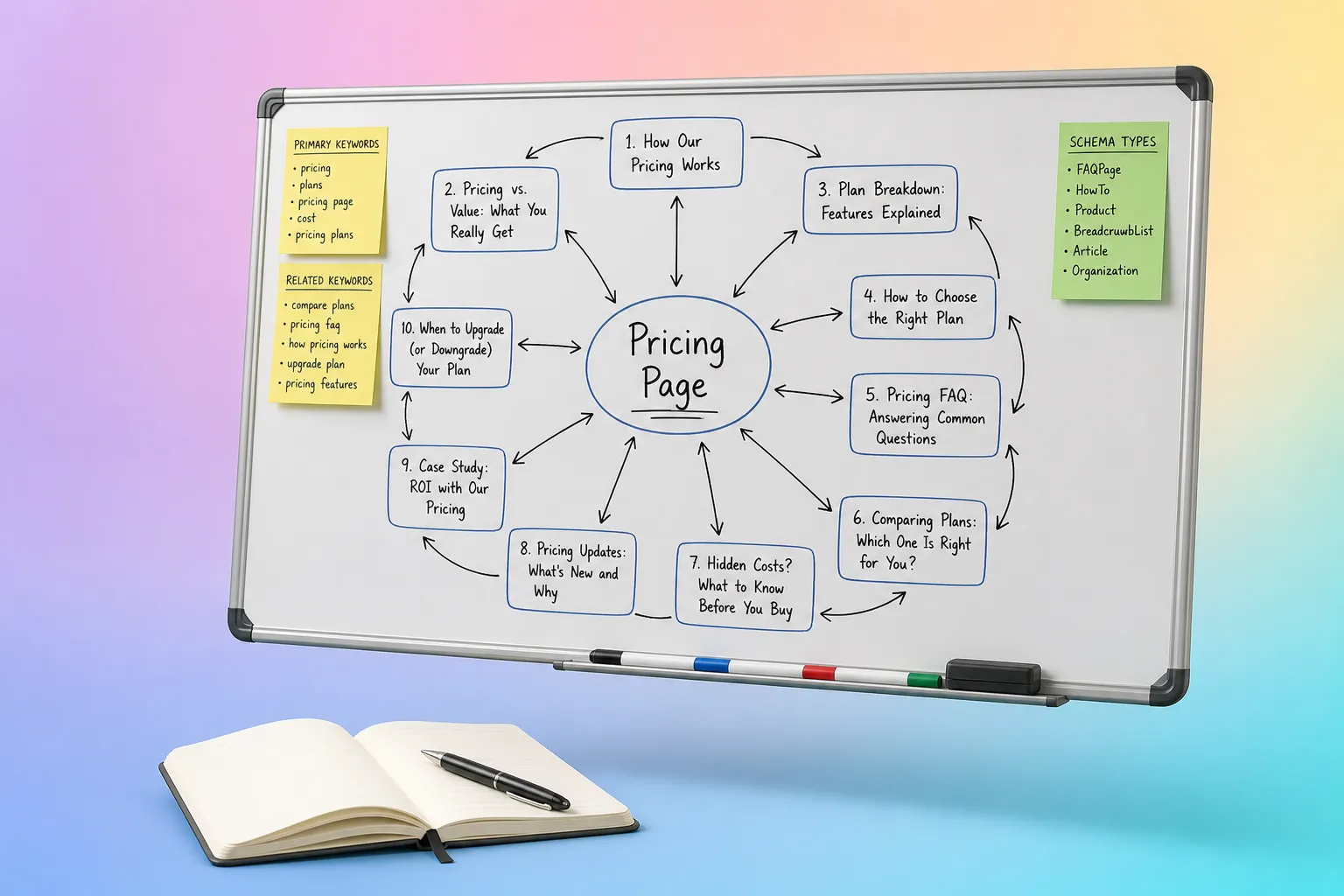
Great blogs do not chase random keywords. They orbit each money page with a tight cluster and a plan for how readers move through it.
Example: a CRM with a core "Real Estate CRM" page. The cluster includes posts like "Lead routing rules for real estate teams," "Text follow-up scripts that get replies," and "New agent onboarding checklist." Every post points back to the revenue page and to 2 - 3 sibling posts. Readers never hit a dead end.
How to set this up without guesswork:
- Map clusters in a sheet with columns for primary keyword, intent, buyer stage, target URL, parent revenue page, internal links from, internal links to, anchor text, entities to mention, media, schema, publish date, refresh date.
- Cover the right entities in each post. For the CRM example, that might include IDX, Zillow, round-robin routing, call queues, Twilio SMS, and “agent onboarding” artifacts. These terms help you match how people and crawlers understand the topic.
- Give each post a job. A top-of-funnel guide links to a product explainer, a mid-funnel comparison, then pricing or demo. Add a small “Next step” module after the intro that routes people based on intent.
- Use varied, natural anchors for internal links. Examples: “real estate CRM,” “CRM for real estate agents,” “pipeline tool for brokerages.” Keep 1 - 2 exact matches per post, then go branded and topical for the rest.
- Publish in sprints. Finish a full cluster in 2 - 4 weeks so internal links resolve fast and the whole set gets crawled together.
Ship on-page details and AI-ready answers
The blogs that win treat on-page like a checklist and format key sections so they are easy to quote in AI answers.
- Title tag: lead with the primary keyword, then a concrete benefit or qualifier. Keep it under ~60 characters so it does not truncate.
- Meta description: 140 - 155 characters with the core value and one action. Avoid buzzwords and fluff.
- Headings: one H1 that matches intent, then scannable H2s and H3s that mirror sub-intents people search for.
- Answer block: add a 40 - 60 word “quick answer” or definition near the top, plus a 3 - 5 step list. Generative summaries like tight definitions and short procedures.
- Media: use descriptive alt text that states what the image shows and why it matters. Compress images and keep filenames readable.
- Schema: Article on every post. Add FAQ only if you actually include useful Q&A at the end of the article. Keep answers short and factual.
- Credibility: show author name, role, and a one-line credential. Add “Last updated” and refresh high-value posts quarterly.
- Formatting: short paragraphs, real examples, and tables where a table beats a wall of text. Aim for 1,200 - 1,800 words if the query warrants it, not by default.
Before you publish, re-read the post with two prompts in mind. First, could a skimming buyer copy a sentence from your post to explain it to their boss? Second, if AI stitched a 3-sentence answer, would it pull yours because it is the cleanest and most complete?
Keep your index clean and crawl paths open
Traffic lifts when crawlers find the right pages fast and you stop wasting budget on junk URLs. High-performing blogs keep hygiene boring and tight.
- Fix orphaned posts. Every post should have at least one category link, one hub link, and two in-text links from other posts. Keep click depth to important posts within three hops from the homepage.
- Consolidate duplicates. If two posts target the same intent, 301 the weaker one into the stronger and keep the better URL. Use canonicals for benign near-duplicates like print pages.
- Kill soft 404s and thin tag pages. Noindex empty tags, faceted search results, and pagination traps. If a page is gone for good, return 410.
- Sitemaps should reflect reality. Only indexable URLs, updated within 24 hours of a new post. Submit sitemaps per section if your site is large.
- Parameters and pagination: avoid creating infinite URL states. Use clean category and date URLs, and make sure internal links point to canonical versions.
- Monitor indexation weekly. Check coverage, canonical mismatches, and sudden drops. When a key post is discovered but not indexed, add links from crawlable pages and fetch again.
Technical polish matters to readers, too. Good Core Web Vitals, readable fonts, and stable layouts reduce pogo-sticking and make your content easier to quote and link.
Earn dofollow links with context, not swaps
Pages that rank tend to earn links, but relying on luck is slow. Smart teams place contextual dofollow links on relevant sites and build assets that others want to cite.
- Comparison content works. “Vs” pages and curated lists win intent and attract citations when they are current and specific. See how this practical guide to B2B LinkedIn marketing tools for 2026 ties features to real workflows like turning site content into scheduled posts, building gated lead magnets with landing pages, and sending captured leads to your inbox. It is specific, so it gets bookmarked and linked.
- Stay non-reciprocal. Place links inside relevant, existing articles on third-party sites, not partner pages. Aim for in-paragraph placements above the fold.
- Vary anchors. Think 60 - 70% branded or URL, 20 - 30% topical, 5 - 10% exact match. Keep it natural.
- Track link health. Watch for stealth nofollows, page deletions, or redirects that drain value. Replace or reroute quickly when a link drops.
- Publish data or templates. Benchmarks, cost calculators, and checklists give others a reason to cite you without outreach.
Do it the easy way with RankGoat
If you want these wins without hiring a team, use an SEO automation tool that does the work end to end. RankGoat plans content clusters around your revenue pages with mapped keywords, entity coverage, and internal link paths. It writes long-form posts with on-page SEO dialed in, including titles, meta tags, headers, alt text, internal links, and appropriate Article and FAQ schema. Then it auto-publishes on a steady cadence so you do not miss weeks.
Links are covered. Each post gets a contextual dofollow placement on a vetted member site using non-reciprocal in-article links. Daily monitoring flags drops or nofollow switches and triggers replacements so gains do not quietly vanish.
Technical cleanup is built in. RankGoat fixes orphan pages, audits soft 404s, triages duplicates, and manages crawl parameters and pagination. Weekly indexation checks review Search Console statuses, sitemaps, robots, and canonicals so new posts get found and stick.
To ride the new wave, RankGoat improves AI search visibility with GEO-aligned sections, like concise definitions and step lists tuned for inclusion in AI answers. It can localize winning posts with native-quality writing and proper hreflang across markets. If you want to try groundwork first, its free tools include a Domain Rating Checker, an SEO Checker, a Sitemap Checker, and a SERP Snippet Preview. When you are ready to scale with a done-for-you blog writing service and a backlink building service in one, compare plans and see RankGoat pricing.
Key takeaways
- Build clusters around money pages and plan the internal paths before you write.
- Ship on-page basics every time and add an answer block that AI likes to quote.
- Keep click depth low, fix duplicates and soft 404s, and keep sitemaps honest.
- Earn contextual dofollow links, vary anchors, and monitor placements weekly.
- RankGoat can automate writing, publishing, links, and the technical cleanup.
Steal the structure, then let consistency do the work. Run the system by hand or hand it to RankGoat.
FAQ
What makes a good blog example worth copying?
It ties posts to a revenue page, nails on-page SEO, uses internal links to guide buyers, and earns clean dofollow backlinks. The result is traffic that converts.
How does RankGoat help with AI search visibility?
RankGoat tracks inclusion in AI answers and applies Generative Engine Optimization and on-page tweaks so your content is more likely to appear in AI summaries.
Can RankGoat handle technical SEO and indexing issues?
Yes. It repairs orphan pages, audits soft 404s, triages duplicates, manages crawl parameters and pagination, and runs weekly indexation checks tied to Search Console.
Does RankGoat build backlinks for every post?
Each post receives a contextual dofollow link from a vetted member site using non-reciprocal placements, and links are monitored daily for drops or nofollows.
Is RankGoat a done-for-you blog writing service?
Yes. It plans clusters, writes long-form posts with on-page SEO and schema, localizes content if needed, and auto-publishes on a steady cadence up to plan limits.